Georgia Hospitality and Tourism Industry Overview 2026

Georgia’s tourism industry enters 2026 at an important turning point. After reaching record international tourism levels in 2025, the market is moving beyond post-pandemic recovery toward a more competitive and mature phase. Hotel development continues across Tbilisi, Adjara and emerging regional destinations, while international brands are expanding their presence.
However, the first half of 2026 has brought a more mixed picture. International tourist visits have remained relatively stable, while total visitor traffic and tourism revenues have softened. This points to a shift in priorities: future growth will depend not only on attracting more visitors, but also on increasing visitor spending, extending stays and improving hotel performance. For hotel owners, investors and developers, understanding these changes is becoming increasingly important.

Source: Georgian National Tourism Administration (GNTA)
Tourism Market Overview
Georgia’s economy grew by 7.5% in real terms in 2025, supported by strong activity across several sectors, including hospitality. Tourism remains a significant contributor to the national economy, accounting for approximately 10% of GDP and playing an important role in employment and service exports.
International tourism reached a record level in 2025, supported by leisure travel, repeat visitors and demand from both regional and long-haul markets.
The distinction between traveler visits and tourist visits is important. Not every international traveler is an overnight tourist; Georgia also receives same-day visitors, transit travelers and other categories.
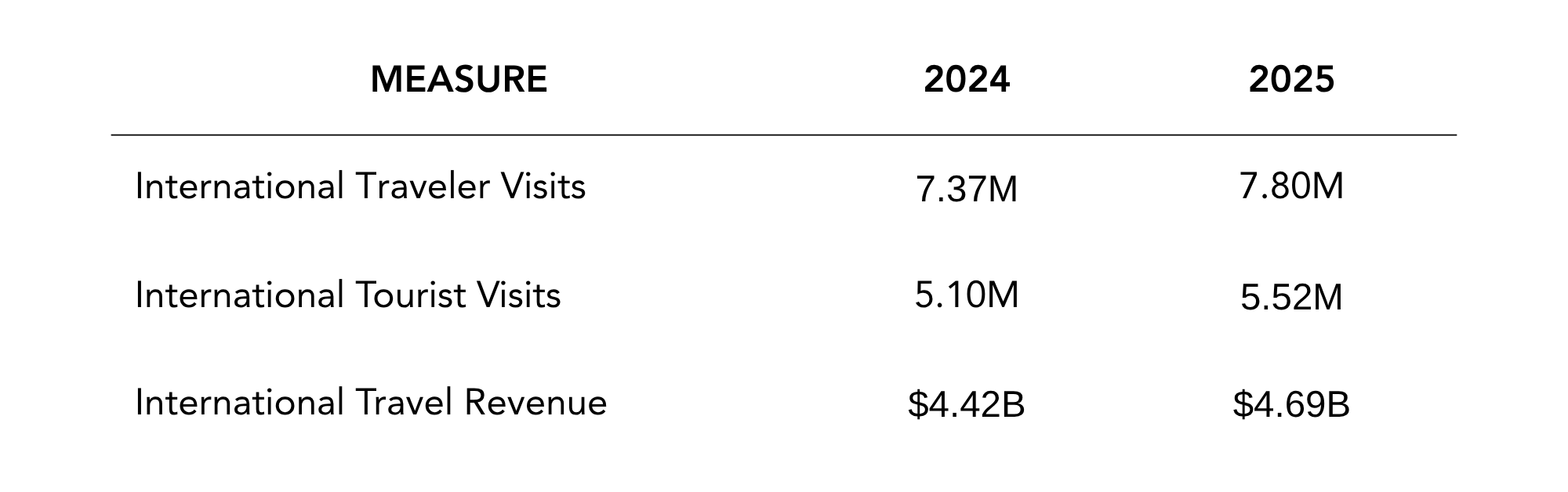
Source: Georgian National Tourism Administration (GNTA)
The start of 2026 has been less dynamic. Geopolitical uncertainty and changing travel patterns have affected visitor flows, highlighting the importance of diversifying source markets and building a more resilient tourism sector.
Georgia recorded 3.05 million international traveler visits in the first half of 2026, down 3.3% compared with the same period in 2025. International tourist visits, however, remained broadly stable at 2.27 million, increasing by 0.1%. Tourism revenues reached approximately USD 1.9 billion, a 2% decrease year-on-year.
The second quarter was weaker, with international tourist visits falling 2.7% and total international traveler visits declining 4.9%.
The picture was not uniform across source markets. Visits from the EU and UK increased by 23.4% in the first half of the year, while visits from China rose 16.7%. These figures highlight the growing importance of market diversification as Georgia navigates a more uncertain tourism environment.

Source: Georgian National Tourism Administration (GNTA)
Hotel Supply and Development
According to Geostat, the country had approximately 2,783 hotels and hotel-type establishments in 2025, offering around 54,300 rooms. The number of hotel guests increased by 6.5% compared with 2024.
Tbilisi and Adjara remain the country’s main hospitality markets, together accounting for more than 42% of hotel establishments. Their appeal is driven by different demand patterns: Tbilisi attracts business travellers, city-break visitors and cultural tourism, while Adjara benefits from coastal leisure demand and seasonal travel.
Other regions, including Kakheti, Imereti, Svaneti and Mtskheta-Mtianeti, offer opportunities for more specialized hospitality concepts focused on wine, gastronomy, nature, wellness and outdoor experiences.
International hotel brands are also becoming more visible in the market. This expansion is raising expectations around service standards, distribution, revenue management and operational efficiency. At the same time, a growing supply of accommodation is likely to increase competition, particularly in destinations where demand remains seasonal. For existing hotel owners, this makes clear positioning and effective management increasingly important.


Georgia Hotel Supply by Region. Source: Aspecture Global Research

Source: Aspecture Global Research; National Statistics Office of Georgia (Geostat)
Hotel development is also becoming more geographically diversified. GNTA's pipeline data identifies a significant number of planned and ongoing projects through 2028, including developments associated with international brands such as Hilton, Accor, Radisson, Marriott and Best Western. GNTA's published pipeline identifies more than 37,000 additional bed-places across planned and ongoing projects.
The expansion of branded supply is particularly relevant because Georgia's hotel market historically relied heavily on independent hotels, guesthouses and locally operated accommodation.
Tourism Demand and Visitor Behavior
Leisure remains the main reason for visiting Georgia. In 2025, holiday, leisure and recreation accounted for approximately half of inbound international visits. Visitors stayed for an average of 5.6 nights, while 78.4% of visits were repeat visits. These figures point to an established base of returning travelers and opportunities to encourage longer stays through multi-destination itineraries and more developed regional tourism products.
International visitor expenditure reached approximately GEL 15 billion in 2025, with average spending of around GEL 2,187 per visit.
For hospitality businesses, these indicators suggest that the opportunity extends beyond attracting new arrivals. Hotels can also focus on increasing direct bookings, encouraging repeat stays, improving ancillary revenue and creating experiences that motivate visitors to spend more time at their destinations.

Source: Georgian National Tourism Administration (GNTA)
Source Markets and Customer Segmentation
Georgia continues to receive substantial visitor traffic from neighboring countries, particularly Russia, Türkiye and Armenia. These markets remain important, but reliance on a relatively concentrated group of source markets also creates exposure to political and economic changes.
At the same time, markets such as Israel, China, India, the EU and the UK are creating additional opportunities for growth and diversification.
Different visitor segments bring different expectations. Some prioritize accessibility and short breaks, while others are drawn to Georgia’s food and wine culture, mountain landscapes, wellness offerings and cultural heritage.
For hotel operators, understanding these differences can help shape pricing, marketing, service standards and the overall guest experience.
Domestic tourism also remains an important part of the market, particularly for regional properties and destinations that depend on weekend travel. Strengthening domestic demand can help hotels reduce their reliance on international arrivals and manage seasonal fluctuations.
Georgia's tourism market remains highly regional but is gradually diversifying. In 2025, the largest visitor markets included:

Source: Aspecture Global Research
The growth rates were particularly notable in several non-traditional and longer-haul market visits from:

Source: Aspecture Global Research;
The European market is particularly important from a value perspective. In 2025, visitors from the EU and UK generated approximately USD 660.4 million, representing 14.1% of international travel revenue. Türkiye generated approximately USD 605.9 million, Israel USD 586.3 million and Russia approximately USD 694 million.

Source: Aspecture Global Research;
Visitor Profile
The 2025 inbound visitor population was concentrated in economically active age groups:

Source: National Statistics Office of Georgia (Geostat)
Men accounted for 57.0% of inbound visitors and women for 43.0%. For hotels, this creates several distinct customer segments, including leisure couples and families, regional short-break travelers, younger experiential travelers, business travelers, MICE groups, ski and mountain tourists, wine and gastronomy travelers, wellness travelers and longer-stay international guests.
Key Trends Shaping the Industry
1. More competition in the hotel market
New developments and international brands are raising the standard of competition. Location alone will not be enough to secure strong performance; product quality, service, distribution and management will matter more.
2. Growth beyond Tbilisi and Batumi
Regional destinations offer opportunities for distinctive hospitality concepts built around wine, gastronomy, nature, adventure and cultural experiences. Successful development will depend on accessibility, local infrastructure and the ability to attract demand throughout the year.
3. Experience-led travel
Visitors are increasingly looking for more than accommodation. Wine experiences, wellness, local cuisine, outdoor activities and cultural programmes can help hotels differentiate themselves and increase guest spending.
4. Better revenue and operational management
As supply grows, hotels will need a clearer understanding of their target markets, pricing strategies, booking channels and operating costs. Revenue management, direct booking strategies and customer relationship management can play an important role in protecting profitability.
5. Sustainability and operational efficiency
Energy use, water management, waste reduction and local sourcing are becoming relevant to both operating costs and long-term positioning. Integrating sustainability into hotel operations can support efficiency while contributing to more responsible destination development.
Risks and Challenges
Despite its long-term potential, Georgia’s hospitality sector faces several challenges. Geopolitical uncertainty can influence visitor flows, while dependence on a limited number of source markets leaves destinations exposed to sudden changes in demand. Seasonality remains another concern, particularly for coastal and ski resorts.
Rapid hotel development may also put pressure on occupancy and room rates if supply grows faster than demand. At the same time, rising labour, energy and construction costs can reduce margins.
For regional destinations, infrastructure and accessibility remain important considerations. Continued investment in transport, utilities, workforce development and service quality will be essential to support sustainable tourism growth.
These challenges reinforce the need for realistic feasibility studies, strong market positioning and professional hotel management.
Opportunities for Investors and Hotel Owners
Georgia continues to offer opportunities for hospitality investment, particularly in segments that respond to changing visitor expectations.
01.Upscale hospitality
Well-positioned hotels serving international leisure, business and events demand.
02.Regional and boutique hotels
Distinctive properties built around local culture, nature and destination identity.
03.Wine and gastronomy tourism
Hospitality concepts that connect accommodation with Georgia’s food and wine heritage.
04.Wellness and year-round tourism
Products that extend demand beyond traditional summer and winter peaks.
05.Hotel repositioning
Renovation, rebranding, operational improvements and revised market positioning for existing properties.
The strongest opportunities will depend on the destination, target customer and competitive landscape. New supply alone does not guarantee commercial success; investment decisions need to be supported by a clear understanding of demand and operating conditions.
Outlook and Conclusion
Georgia’s tourism fundamentals remain attractive with its cultural heritage, cuisine, wine traditions, natural landscapes and Black Sea coastline provide a diverse foundation for international and domestic travel.
However, the softer start to 2026 highlights the importance of looking beyond visitor numbers. The next phase of growth is likely to depend more heavily on spending, length of stay, year-round demand and the ability of hotels to operate efficiently in a more competitive market.
For investors and operators, this means paying closer attention to feasibility, positioning, revenue management, guest experience and long-term asset performance.
At Aspecture Global, we work across independent hotel management, hospitality advisory, tourism development and sustainability services. We support hotel owners, investors and developers with market analysis, development strategy, operational improvement, pre-opening, revenue management and sustainable hospitality solutions. As Georgia’s hospitality market evolves, our focus remains on helping stakeholders make informed decisions, strengthen hotel performance and identify opportunities for sustainable, long-term growth.
Sources
Georgian National Tourism Administration (GNTA) — Research and Statistics
Georgian National Tourism Administration (GNTA) — Annual Tourism Reports
National Statistics Office of Georgia (Geostat) — Hotel and Hotel-Type Enterprise Statistics
National Statistics Office of Georgia (Geostat) — Hotels and Restaurants Data


