Understanding Climate Change: The Path to Zero Emissions
Updated: Aug 7, 2025
Climate change is one of the most pressing challenges the world faces today. There are two crucial numbers to understand: 51 billion and zero.
The first number, 51 billion, represents the total tons of greenhouse gases that are released into the atmosphere each year. The second number, zero, is the target we must reach to combat global warming and avoid the most severe impacts of climate change.
The Urgency for Transformation
Reaching zero emissions requires a transformation in how every country and sector operates. It's not just about reducing emissions; we need to eliminate them entirely. Every aspect of our lives needs to change. This includes how we generate electricity, manufacture goods, grow food, and transport people and products. Additionally, we must also look at how we heat and cool our buildings.
Greenhouse gases trap heat in the atmosphere, which warms the planet. Once these gases are released, they persist for long periods. For instance, about one-fifth of the carbon dioxide emitted today will still be present in the atmosphere 10,000 years from now. The more greenhouse gases we emit, the more heat is trapped, and the higher the Earth's temperature rises.
Historical Context
Before the Industrial Revolution in the mid-18th century, the Earth's carbon cycle was balanced. Natural systems absorbed as much carbon dioxide as they emitted. However, this balance was disrupted when we began burning fossil fuels. These carbon-rich materials, like coal, oil, and natural gas, were formed from compressed plant matter over millions of years. Burning these fuels releases carbon that had been stored underground, leading to an increase in atmospheric CO₂.
Since pre-industrial times, global temperatures have risen by approximately 1°C. If current trends continue without major changes, we could see an increase of 1.5°C to 3°C by mid-century, and a staggering 4°C to 8°C by the end of the century. These levels of warming could have catastrophic consequences for our planet and future generations.
The Need for Unprecedented Innovation
Transitions to new energy sources typically take decades or even centuries. Unfortunately, we no longer have that much time. To achieve zero emissions, we must pursue unprecedented innovation. This includes scientific and engineering breakthroughs, modernized laws and regulations, smarter public policies, and efforts to make green alternatives affordable for everyone.

Emissions Math: Evaluating Our Impact
When addressing greenhouse gas reductions, it’s imperative to frame them in terms of the global context: eliminating those 51 billion tons annually. Instead of vague analogies like “this many tons is equal to taking one car off the road,” we achieve a clearer understanding by presenting reductions as a percentage of the global total.
For instance, consider a climate initiative that cuts 17 million tons of greenhouse gas emissions per year. Compared to the global total of 51 billion tons, that represents a reduction of only 0.03%.
At first glance, this number may seem insignificant. However, every fraction counts, especially if initiatives have the potential to grow. Small reductions today can turn into major contributions tomorrow if they scale efficiently, inspire further innovation, or influence policy and industry standards.
The Big Five: Key Sectors for Emission Reductions
Generating electricity accounts for about 25% of global greenhouse gas emissions. To achieve net-zero emissions, we must tackle emissions across all human activities—not just the electricity sector. These emissions can be grouped into five key sectors:

Though electricity generation isn’t the largest contributor, clean electricity is crucial for reducing emissions in other sectors. For example, switching to electric cars and buses, electrifying heating systems, and powering energy-intensive industries with renewable electricity instead of natural gas are critical steps. Clean electricity is not a standalone solution, but it forms a foundational part of reducing emissions.
How Can We Understand Energy Scales?
Understanding energy measurements is vital to comparing various clean energy technologies. The numbers can grow quickly, so using shorthand simplifies comprehension.
A kilowatt (kW) is equal to 1,000 watts.
A megawatt (MW) equals 1 million watts.
A gigawatt (GW) represents 1 billion watts.
To put this into context:
When you hear kilowatt, think of the energy needs of a single home.
A gigawatt can power a city.
One hundred gigawatts or more can supply energy for a large country.
Space Requirements of Different Energy Sources
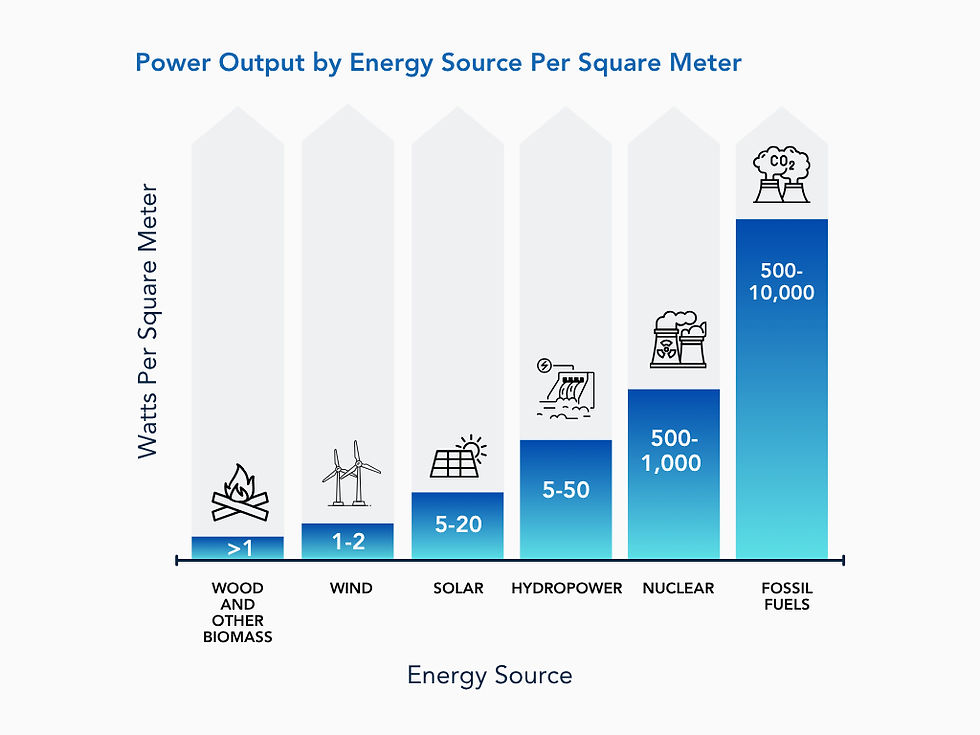
Power density is a critical factor—we must consider how much space different energy sources require to generate power. Understanding the land or water area needed to produce energy informs our planning and evaluation of various clean technologies. Here are some examples of differences in power sources:
Making Clean Energy Affordable
One reason we continue to emit large amounts of greenhouse gases is that, when ignoring long-term environmental costs, fossil fuel technologies appear to be the most economically viable. However, many zero-carbon alternatives remain more expensive than these fossil fuel counterparts. This cost discrepancy is known as the Green Premium.
To facilitate the transition to clean energy, we need to significantly reduce these Green Premiums so that middle-income countries can afford and choose clean technologies over fossil fuels. Making clean energy accessible worldwide is essential for achieving global emissions goals.
Conclusion
Tackling climate change begins with asking the right questions. By comprehending emissions, energy usage, space requirements, and costs, we can make informed decisions toward achieving zero. These five key questions are not merely points of discussion; they serve as guides for action. If we channel our efforts into clear goals and scalable solutions, we can make meaningful strides toward a cleaner, sustainable future.
For more on how to contribute to this important mission, check out this resource.


